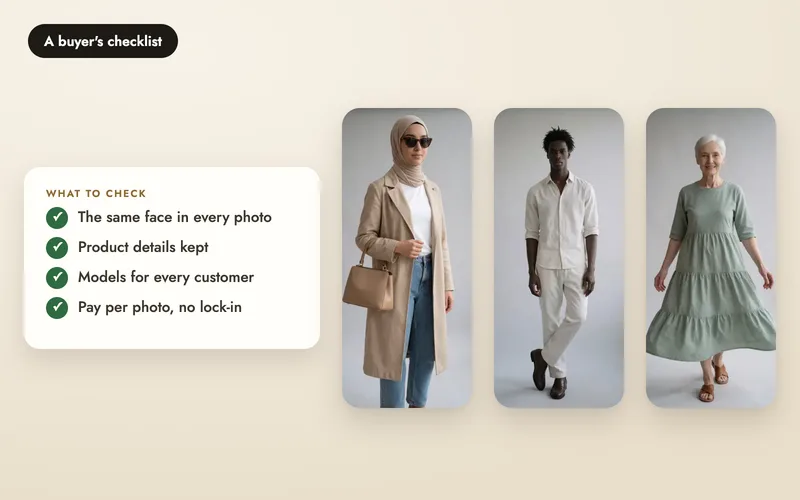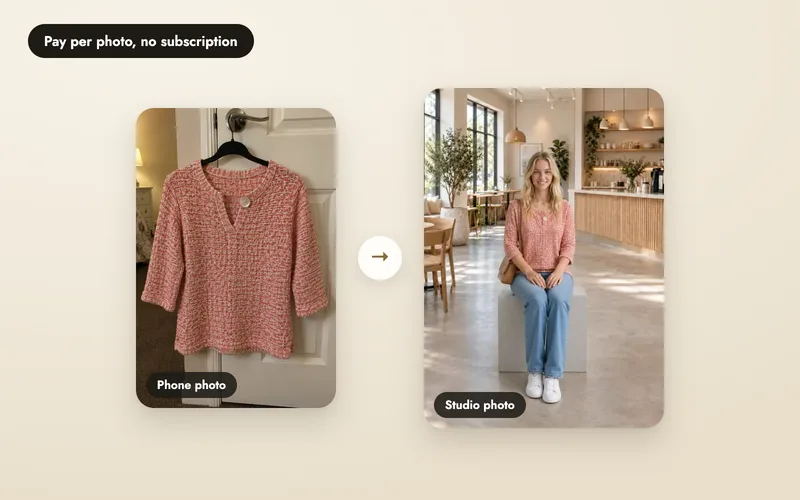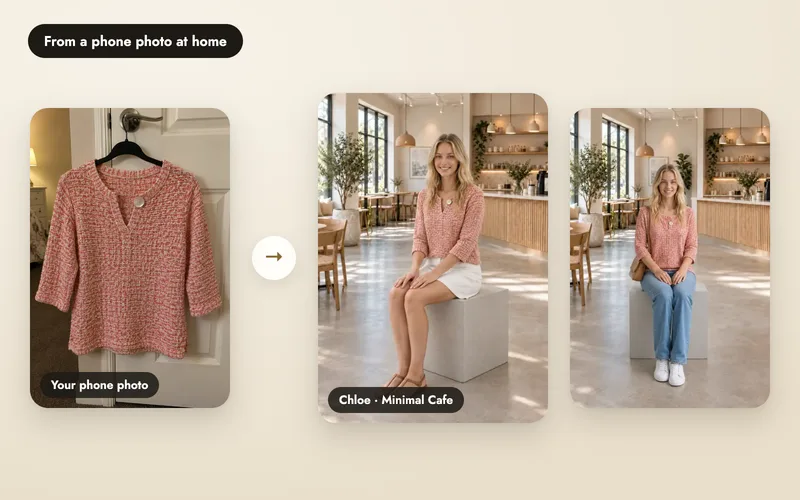
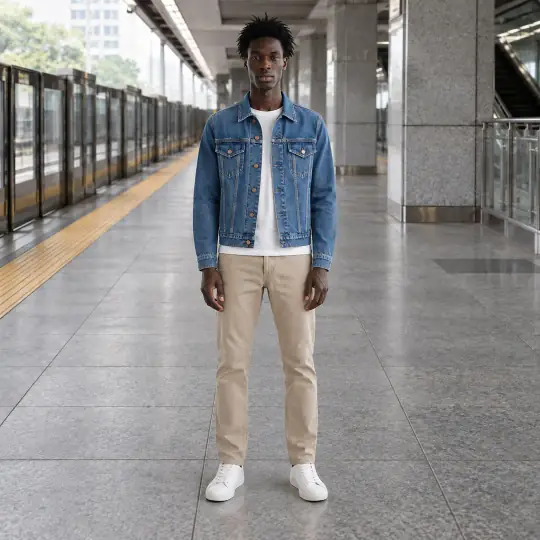
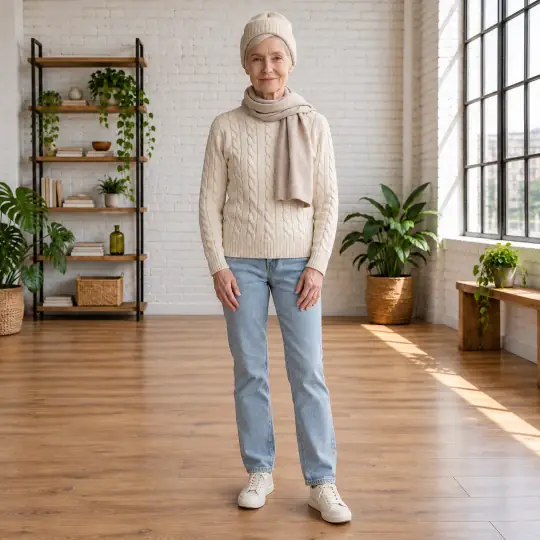
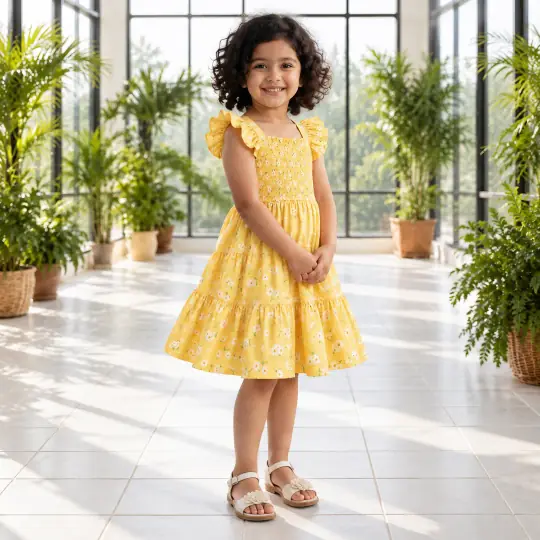
A traditional shoot books one model in one place on one day. With A Pose Studio you start from a phone photo taken at home and choose from 40+ models, unlimited poses and scenes you can describe in your own words, in minutes. Introductory prices make it easy to test on one product before you decide how to split your work.
Where AI product photos help
- Speed. A shoot with A Pose Studio is usually ready within a few minutes of pressing create, against a traditional shoot that has to be booked, styled, shot and edited over days.
- Variety. Once your product photo is uploaded, trying it in a different pose or scene is a new selection, not a new booking. Testing 10 scene and pose combinations for one product costs 10 × 5 credits, not 10 separate shoot days.
- Reuse across a large catalogue. A pose that suits a T-shirt suits many other T-shirts; you're not paying a model's day rate again for the fifth similar SKU.
- Cost predictability. The price of a photo is shown before you confirm, and it doesn't change with the day rate of whoever's available that week.
- Trying a product on before it's manufactured. An AI photo can be made from a mockup or a sample photo, ahead of stock existing to physically shoot.
Where a traditional photoshoot still wins
- Exact fabric behaviour. How a specific silk drapes, how a stiff leather actually creases, how a fabric catches real studio light: a physical shoot captures the real material, not a close approximation of it.
- Complex styling. Multiple garments layered exactly as designed, precise accessory placement, or a look that depends on a stylist's hands-on adjustments in the moment.
- Brand campaigns built around real people. A campaign fronted by a specific celebrity, athlete or influencer needs that real person, photographed as themselves.
- Legal or likeness requirements. Anything that needs a signed model release for a specific, identifiable real person, or a contractual right tied to that person's actual likeness.
- Multiple real people interacting. Group shots where the interaction itself (a genuine glance, a hand on a shoulder) is the point.
A practical hybrid approach
Most sellers don't have to pick one and abandon the other:
- Reserve traditional shoots for what only they can do: hero campaign imagery, anything with a named real person, and any product whose fabric behaviour is central to the sale (a heavy silk saree, structured leather).
- Use AI for catalogue breadth: the range of poses, scenes and crops a full catalogue needs across many SKUs, especially ones photographed once and reused for months.
- Use AI to get new SKUs listed fast, then schedule a traditional shoot later for the ones that turn out to sell well, once the spend is justified.
- Use AI to test looks before committing a traditional shoot's budget to a specific pose, scene or model direction.
Quick checklist: which one for this shot?
| If the shot needs | Lean toward |
|---|---|
| A specific named person, or a signed likeness release | Traditional |
| Exact drape or texture of an unusual fabric | Traditional |
| Many poses or scenes for the same product | AI |
| A new SKU listed as fast as possible | AI |
| A tight, predictable per-photo cost | AI |
| Multiple real people interacting on camera | Traditional |
See the cost mechanics of each approach in how AI product photography cost actually works, including a worksheet for pricing your own traditional shoot.
See it on your product
Take a phone photo at home, say a top on a hanger on a door, and see it on one of 40+ models in your own choice of pose and scene. Introductory prices and 25 free credits to start. Explore the models and features.
Start free with 25 credits